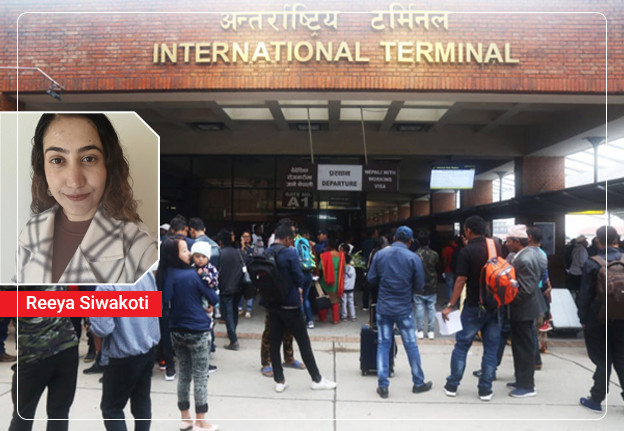
One of the most urgent social issues Nepal has been facing in recent years is rising unemployment rate, especially among the youths. It is the harsh reality the significant numbers of youths are facing, moreover, the problem isn’t static. Never has Nepal faced such a serious unemployment problem as it is now facing after COVID-19 pandemic. Huge number of people are forced to leave the country in search of work abroad because of very limited job opportunities. Nepal issued labor permits for over 3.5million people to work abroad. However, the exact number of people migrating abroad is still unclear. A huge number of Nepal migrant labor has been moving to India, however no exact figures can be found so far as Nepal do not require work permit or visa to work there due to open border system. Out of Nepal’s total population which is 30million, an estimated 3.5million to 8million, especially from hilly regions are now working in India. Although the foreign destination has been India, other countries like Middle East, Malaysia, South Korea and Japan has become common destinations for Nepali migrant workers to support their families in Nepal. This departure not only reflect the lack of job opportunities at country but the harsh reality many Nepalis face to earn a living. This has created a huge shortage of labor in the agricultural, industrial, construction, tourism, business and trade sectors in the homeland. And this shortage has slowed down Nepal’s economic growth and overall development in a whole as the most skilled and educated youths are compelled to leave the country, depriving overall potential innovation. The worst part about working abroad is they are forced to work with low wage oftentimes hazardous jobs, in expense of their physical and mental well-being.
Something that’s more heartbreaking is most of these youth think they have no other option beside this. Our education system apparently cannot compete with the international broader job market. Colleges and universities in Nepal often fail to match the skills they teach with the needs of the economy. This only escalate the cycle of migration and unemployment. The only solution lies to this problem is generating employment opportunities within Nepal. This isn’t only about building more factories or providing jobs in construction sites, But, about investing in multisector like agriculture, technology and tourism where youth can use their creativity and education to thrive on their field. Not only this, government need to inspire youths to start their own businesses, focus on entrepreneurship, providing them the support they need to succeed.
Reports shows that quite large number of youth are deporting abroad on visit visas, with the intention of winding up there as undocumented workers. To access this trend of moving abroad illegally, the Departure of Immigration of Nepal has proposed “English language communication proficiency” as one of the requisites to be allowed for going abroad in visit visas. However, many hold that this rule doesn’t make sense. It is generally not fair to prevent people from moving abroad just because they don’t speak English ‘well’. Therefore, a new plan has been suggested: instead of checking their English skills, people should be permitted to travel on a visit visa if they if they buy insurance worth NPR 2million.
According to Nepal’s Department of Foreign Employment, over 1.5million Nepalis acquired work permits from 2014 to 2023. A significant portion of that travel still remains active, which means over 200,000 migrants every year. The World Bank reportedly shows that remittance, especially from these overseas workers- account for around 25 to 30% of Nepal’s GDP. And the reason they migrate apparently is limited local jobs, higher wages abroad, poverty and livelihood pressure, chain migration, education-to-employment mismatch, domestic instability and the lists goes on with no full stop anytime soon. This isn’t only about making Nepal vulnerable to global stocks, it’s also about supply gap in key sectors like construction, tourism, agriculture and equally about socials costs like mental health strains, family separation, workers returning with minimal skills.
Talking about unemployment rate, the rate has increased from 10.60% in 2023 to 10.71% in 2024, according to a report published by Statista and Trading economics. This rise is more among younger workers, aged between 15years to 24years, bouncing from 7.3% in 1996-1996 to 22.7% in year 2022-2023. Similarly, the unemployment rate in Nepal is forecast to 20.85% in 2025 according to Statista and the root behind this includes, mismatch between education and job market, limited job creation in key sectors, high level of informal employment, economic shocks and COVID-19 impacts, rural-urban disparity and limited rural opportunities. This matters because with 1 out of 5 youth moving out of country, the country loses potential growth and productivity. Disillusioned workers either leave the country or are forced to remain unemployed, draining human capital. At the same time, long term joblessness leads to mental stress, dependency and can cultivate unrest, which worsen the situation.
Among all the available resources a country possess, human resources are the most major for development. Therefore, government ought to prioritize people’s skills and abilities. Even though they might have great potential, if not managed properly, it can lead to poverty, suffering, and instability. Therefore, its high time government take this issue on a serious note and acts on it without further delay, else not only the country will lose its skilled human resource but impacts negatively on overall growth and development.
Reeya Siwakoti
B.A.LL.B 4th year
Kathmandu School of Law